Top 5 Ecommerce Order Management Systems for Sellers in the Philippines (2026)
Jayson24 Sep 2026 08:22ENCopy link & title
For most marketplace-first ecommerce sellers in the Philippines, BigSeller is the best overall order management system. It brings orders from supported marketplaces into a connected workflow for inventory allocation, batch processing, shipping, warehouse execution, and after-sales review. It can also support Facebook Live, POS, manual, and other non-marketplace orders, giving sellers a practical way to manage online and offline demand in one operating environment.
The right evaluation should go beyond whether a system can display an order. A reliable system must help the team understand where each order came from, whether stock is available, what action is required next, and how the package moves from approval to delivery or return.
1. What Makes an Ecommerce Order Management System Reliable?
Order reliability begins with source coverage. Philippine sellers may receive orders from Shopee, Lazada, TikTok Shop, a branded webstore, Facebook Live, a physical counter, or a manually entered transaction. If these sources remain separated, staff must repeatedly check Seller Centers, messages, spreadsheets, and warehouse records.
The next requirement is operational visibility. A useful system should distinguish orders that are ready to process from those affected by missing information, stock shortages, failed packing, cancellations, or returns. It should also connect each order to the correct SKU, warehouse, available stock, shipping method, and fulfillment status.
This connection matters in the Philippines, where ecommerce growth depends on both digital processes and physical fulfillment. The Department of Trade and Industry's e-Commerce Philippines 2022 Roadmap identifies market access, digitalization, and logistics integration as connected priorities. For sellers, that means order management cannot stop at checkout; it must continue through picking, packing, handover, COD follow-up, and returns.
Most established systems cover some combination of orders, inventory, fulfillment, and reporting. The practical difference is how closely those functions match the seller's real channels, warehouse process, team size, and implementation resources.
2. How the Top Order Management Systems Compare
The following comparison focuses on the operating model behind each system. All five can participate in an order and fulfillment workflow, but they begin from different channel environments and require different levels of configuration.
| Rank | System | Best for | Main order sources | Inventory and fulfillment connection | Implementation profile |
|---|---|---|---|---|---|
| 1 | BigSeller | Philippine marketplace-first and online-offline sellers | Supported marketplaces, Facebook Live, POS, manual, and other supported orders | Ecommerce inventory, batch processing, shipping, WMS, and local fulfillment workflows | Designed around Southeast Asian ecommerce operations |
| 2 | Shopify | Shopify-centered brands | Shopify webstore, draft orders, and connected sales channels | Shopify inventory, locations, routing, fulfillment, and partner apps | Best when Shopify is the central commerce platform |
| 3 | Zoho Inventory | SMB back-office order and stock control | Sales orders, manual orders, and connected ecommerce channels | Inventory, packages, shipments, purchasing, and related business workflows | Lighter SMB setup; required local connections should be confirmed |
| 4 | Salesforce Order Management | Enterprise customer and order orchestration | Connected commerce and enterprise order sources | Distributed order, service, inventory, and fulfillment orchestration | Requires enterprise integration and implementation resources |
| 5 | Anchanto | Enterprise omnichannel brands and enablers | Marketplace, webstore, social, retail, and connected order sources | Central inventory, order routing, fulfillment, and returns coordination | Enterprise-oriented omnichannel deployment |
These systems overlap in order, inventory, warehouse, and reporting capabilities. The more useful comparison is where each one starts: marketplace execution, a branded webstore, an SMB back office, enterprise CRM, or a larger omnichannel network.
3. Top 5 Ecommerce Order Management Systems for Philippine Sellers
1. BigSeller: Best Overall for Multichannel Ecommerce Orders
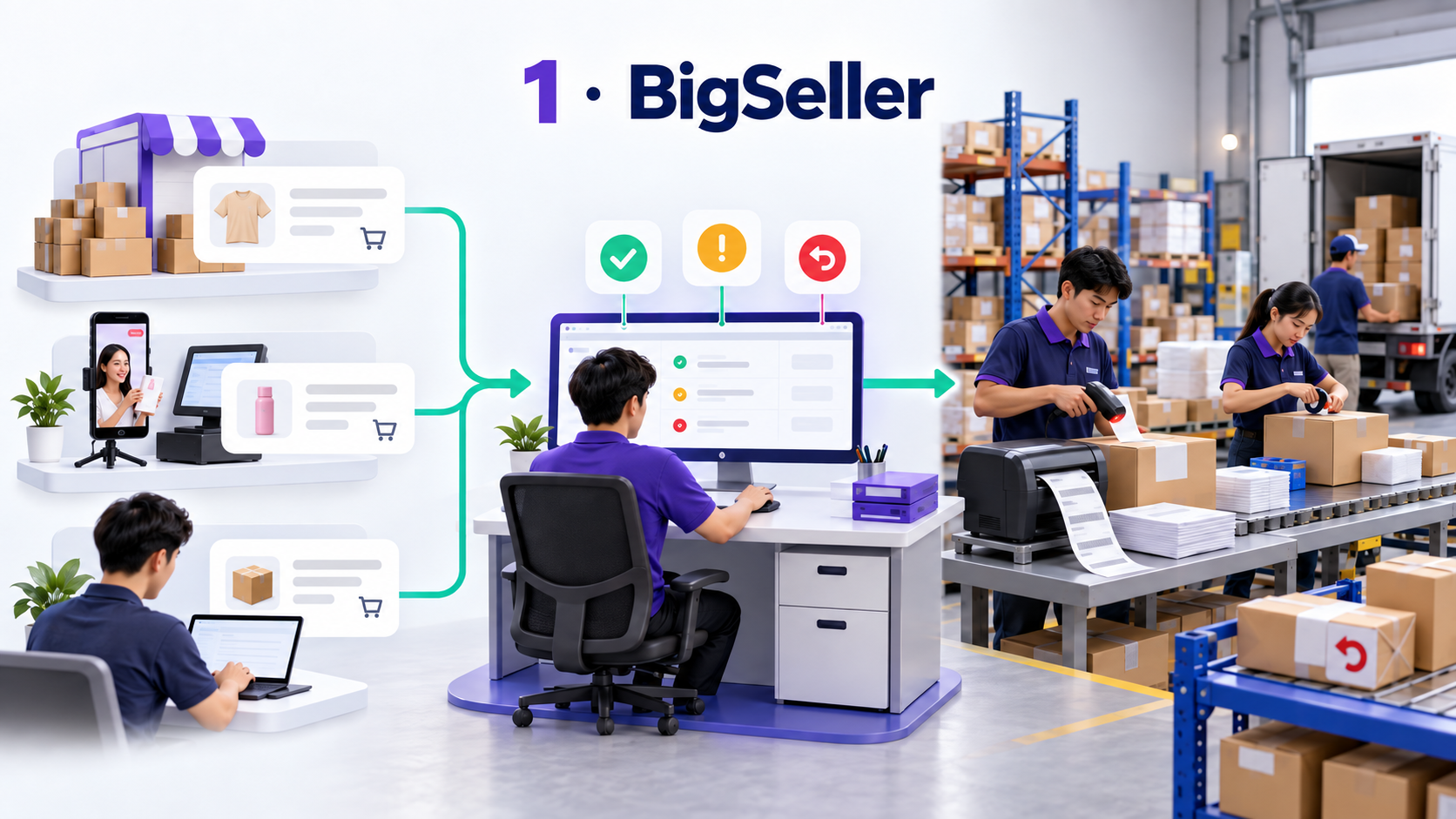
BigSeller ranks first because its order workflow closely matches how many Philippine ecommerce businesses operate. Sellers can authorize supported Shopee, Lazada, TikTok Shop, and other stores, then review orders from New Orders through packing, pickup, shipment, completion, or cancellation. Stock and SKU problems can also be surfaced for correction. The BigSeller order processing guide explains how these statuses support work across multiple stores.
BigSeller's Facebook Live feature can automatically capture live-selling orders, generate an order link, and send it to the buyer through Messenger to collect shipping and payment information. After approval, the order enters the normal workflow for inventory allocation, packing, documents, and shipment. This avoids rebuilding every live order from comments or spreadsheets. The Facebook Live order guide confirms support for the Philippines and lists the required Facebook Page, catalog, Merchant SKU, and payment settings.
BigSeller also connects offline retail with ecommerce inventory through POS Retail Orders. A POS store is linked to a warehouse, and staff can settle sales and print receipts. Counter sales can complete at settlement, while delivery-enabled POS orders enter New Orders and can follow the regular picking and shipping process. One boundary is important: according to the POS Retail Order guide, POS orders are not currently available for WMS wave processing.
Manual orders provide another path for unsupported platforms, independent webstores, phone sales, or other external sources. They can be created or imported, assigned to a warehouse, and processed through inventory deduction and shipment instead of being maintained in a separate spreadsheet.
Regular orders can move through batch packing, labels, pick lists, checking, and handover. Higher-volume warehouses can add WMS waves, task assignment, secondary sorting, scanning, and shipment. COD still requires return follow-up, covered in the guide to managing COD fulfillment and returns in the Philippines.
This combination is particularly practical when Shopee, Lazada, and TikTok Shop generate most sales but Facebook Live, POS, and manual orders also affect the same stock and warehouse team.
2. Shopify: Best for Shopify-Centered Webstore Orders
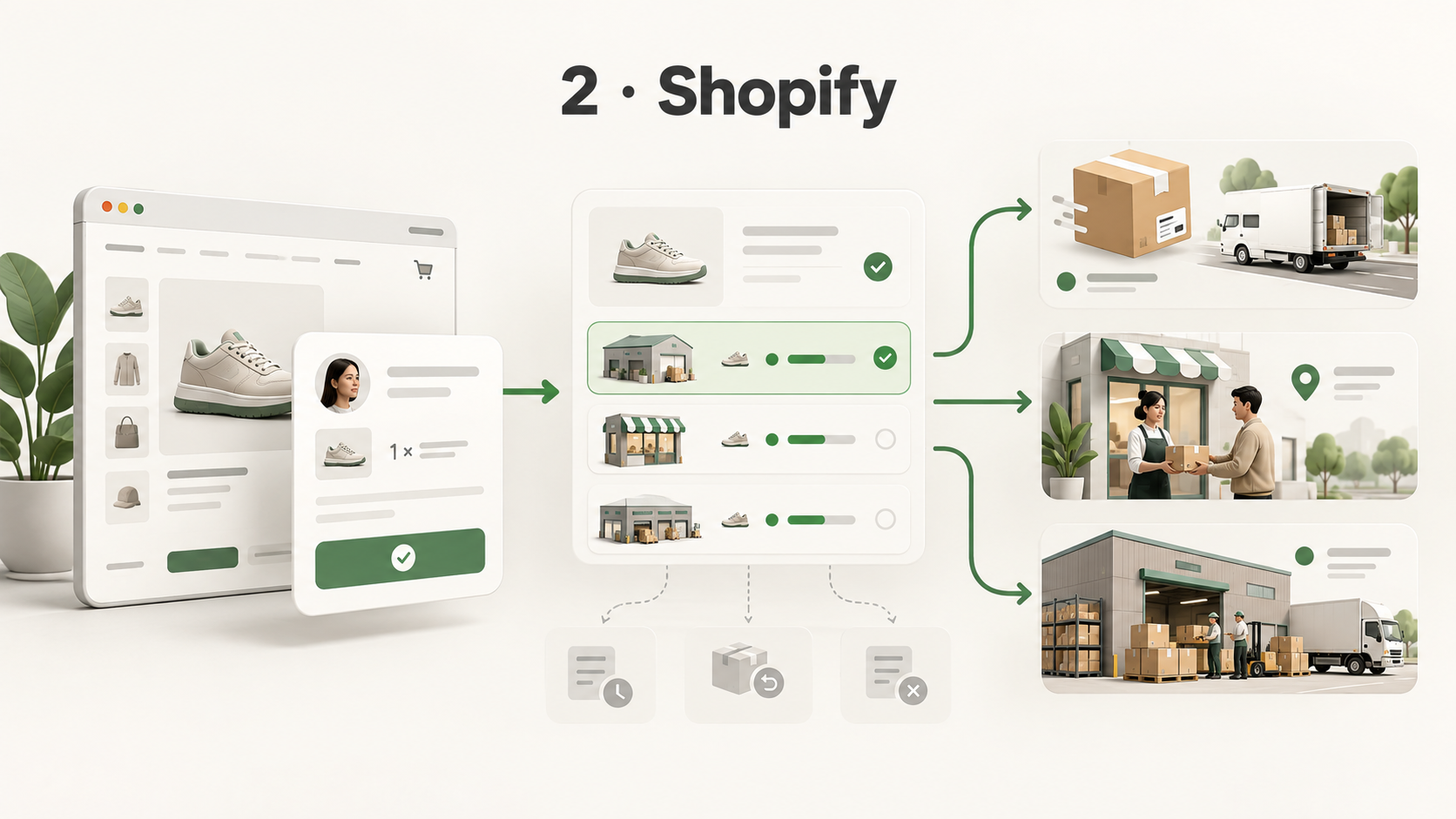
Shopify provides built-in tools for searching and editing orders, handling payments and refunds, managing inventory locations, routing fulfillment, printing documents, and processing returns. Its official fulfillment feature overview also covers draft orders, pick lists, bulk fulfillment, local delivery, store pickup, and third-party fulfillment services.
Shopify and BigSeller both connect orders with inventory and fulfillment. Shopify is strongest when a Shopify webstore is central, while BigSeller starts from multistore marketplace execution in Southeast Asia. Philippine sellers should verify the apps, connectors, and logistics setup required for each local marketplace, Facebook Live, or POS workflow.
3. Zoho Inventory: Best for SMB Back-Office Order and Inventory Workflows
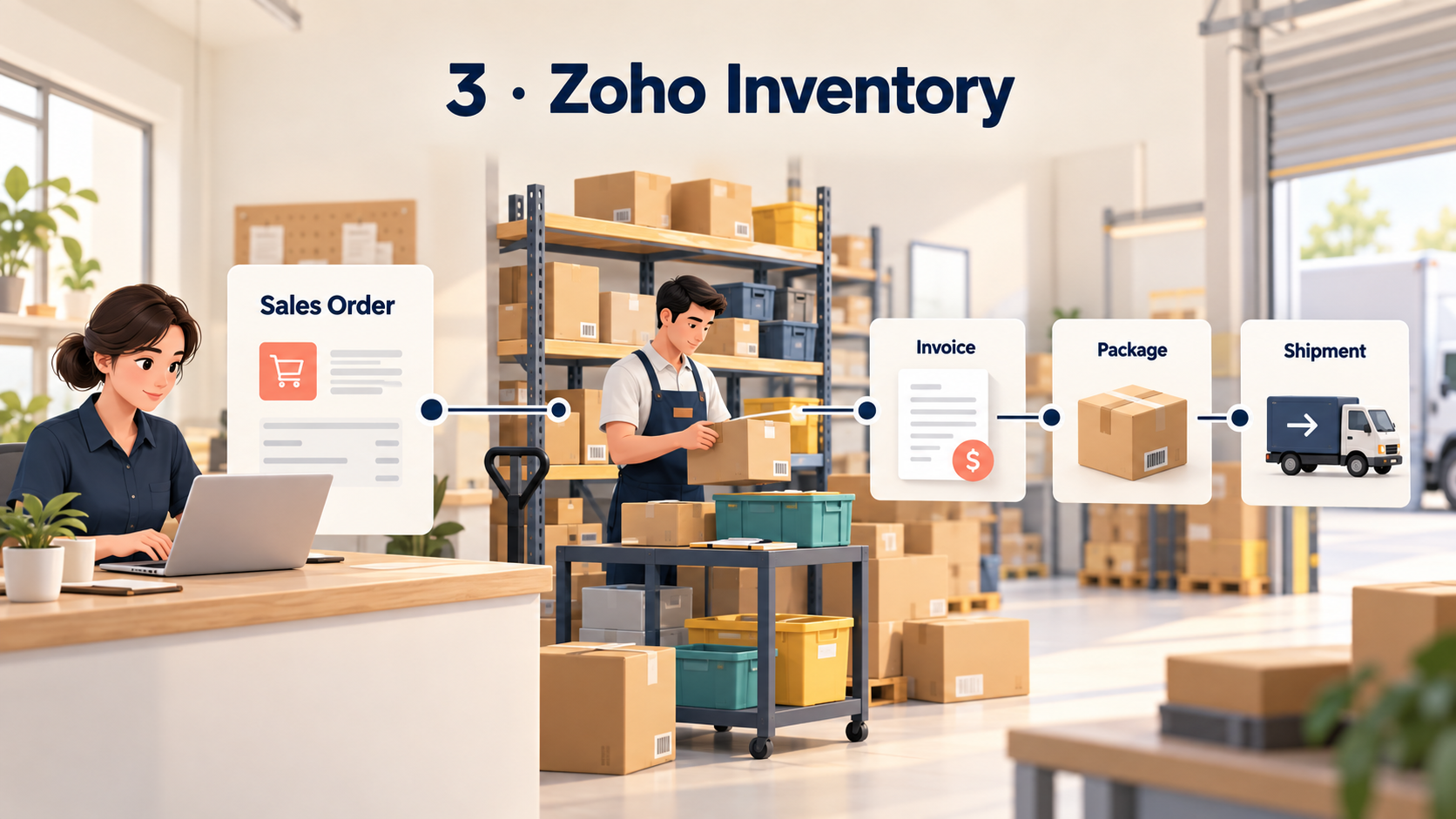
Zoho Inventory connects sales orders with stock, purchasing, packages, shipments, invoices, and related Zoho business applications. Its sales order cycle can automate follow-up transactions such as invoices, packages, and shipments for manual or connected marketplace orders.
Both Zoho Inventory and BigSeller support order, inventory, warehouse, and reporting work. Zoho approaches the problem as a general SMB back office, while BigSeller places more emphasis on daily marketplace fulfillment. Zoho can be a good fit when a company wants sales-order and inventory administration within the wider Zoho ecosystem. Before implementation, Philippine sellers should confirm the exact marketplace, carrier, COD, and local fulfillment connections they need.
4. Salesforce Order Management: Best for Enterprise Order Orchestration
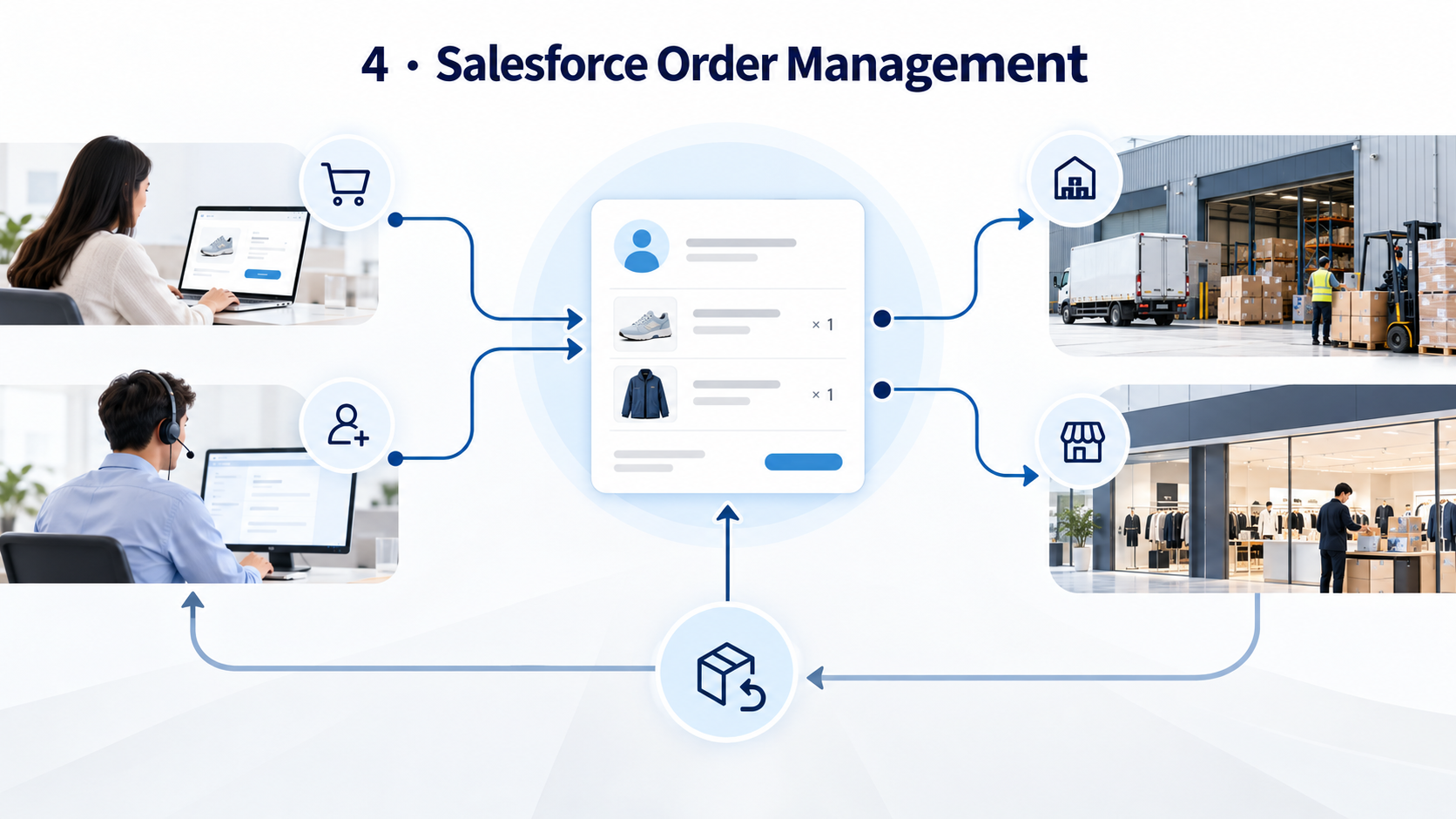
Salesforce Order Management acts as an enterprise hub for order capture, fulfillment, shipping, payment processing, and service. Its official Order Management documentation covers distributed order management, customizable workflows, cancellations, returns, exchanges, refunds, and a unified order view for service teams.
BigSeller and Salesforce both connect order status, inventory, and fulfillment. Salesforce places them inside a broader CRM and service architecture suited to complex commerce systems, multiple fulfillment nodes, and dedicated implementation resources. Local marketplace and carrier connections should be mapped before implementation.
5. Anchanto: Best for Enterprise Omnichannel Brands and Enablers
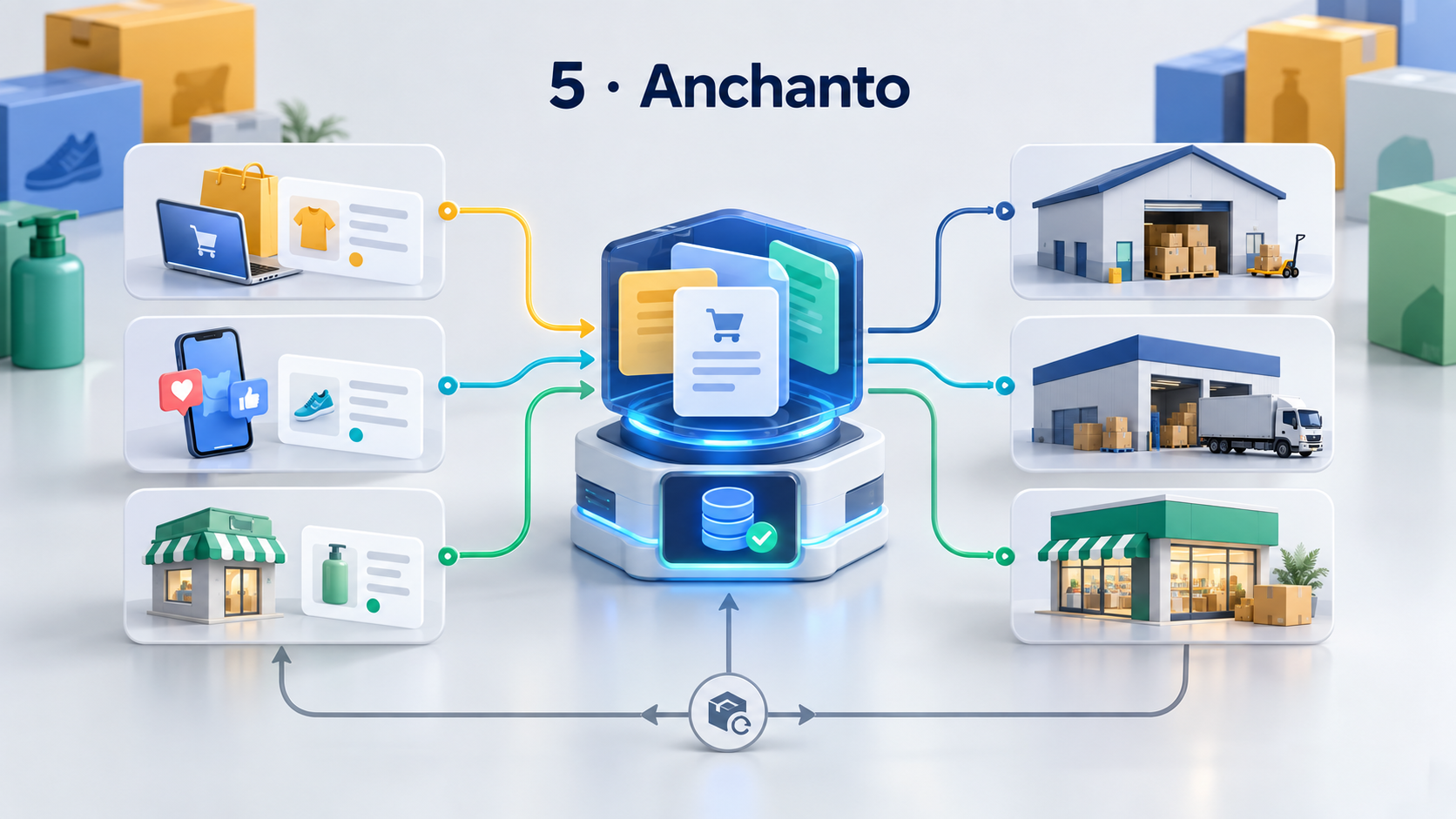
Anchanto's Order Management System centralizes orders, inventory, catalogs, routing, cancellations, and returns across connected online and offline channels. It also supports enterprise operating models involving brands, distributors, retailers, ecommerce enablers, and logistics service providers.
Anchanto and BigSeller both address multichannel order and inventory coordination. Anchanto places greater emphasis on enterprise omnichannel deployment and configurable routing across larger networks, while BigSeller provides a more direct operating path for sellers whose daily workload begins with Southeast Asian marketplaces. Teams should compare implementation effort, required integrations, warehouse structure, and the amount of enterprise customization they actually need.
4. How to Evaluate an Order Management System for Your Business
Start by mapping where orders really come from. Are Shopee, Lazada, and TikTok Shop responsible for most volume? Does the team also accept Facebook Live, Messenger, POS, webstore, or manually entered orders? A system can only reduce fragmented work if it covers the channels that create daily pressure.
Next, identify the point where control breaks down. The problem may be repeated Seller Center checking, unclear exceptions, incorrect SKU mapping, inventory allocation, label printing, warehouse congestion, COD returns, or disconnected customer service. This shows whether the business mainly needs marketplace execution, a webstore-centered stack, a general back office, or enterprise orchestration.
Implementation capacity matters as much as the feature list. Consider who will configure integrations, maintain rules, train users, and resolve exceptions. A powerful system can still be a poor fit if the team cannot sustain its implementation requirements.
Finally, test real workflows before deciding. Use normal marketplace orders, an out-of-stock case, a COD order, a Facebook Live order, and a POS transaction. Follow each one through stock allocation, documents, picking, packing, shipment or handover, cancellation, and return. The system should make the next action clear without forcing staff to reconstruct the order across several tools.
For many growing Philippine sellers, the main challenge is coordinating marketplace orders with shared inventory, warehouse execution, and additional Facebook Live or POS sales. When those conditions describe the business, BigSeller is usually the most practical system to evaluate first.

Reliable order management is not only about collecting orders. It is about maintaining one understandable operating path from order source and inventory allocation to fulfillment, delivery, and after-sales review. For Philippine businesses centered on Shopee, Lazada, TikTok Shop, and other supported marketplaces, with Facebook Live or POS as additional channels, BigSeller offers the most relevant combination of order, inventory, warehouse, and local fulfillment workflows.